












The brokerage industry is heading into a mature phase. Spreads are compressed, execution speeds are standardized, and white label tools have leveled the playing field. With most platforms offering similar pricing and features, brokers need new ways to differentiate and keep traders active.
With most platforms offering similar tools and pricing, brokers need new ways to stand out and keep traders active. That’s where prediction markets come in. In 2026, they’re quickly becoming one of the most talked-about additions to competitive trading platforms.
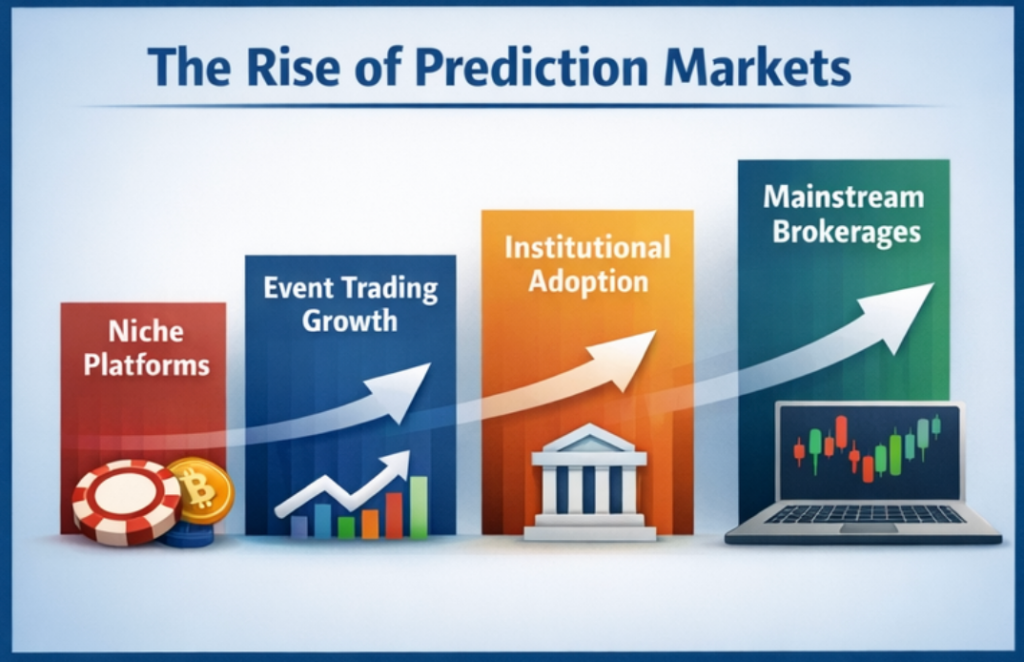
What began as a niche experiment at the intersection of betting and crypto is rapidly evolving into structured event-based trading inside mainstream brokerage environments. Here’s what you must know about prediction markets in 2026.
Key Takeaways
- Prediction markets are moving from niche platforms into mainstream brokerage apps.
- Institutional players are starting to support and validate the model.
- White label solutions now make it easier for brokers to offer event-based trading.
- In competitive markets, prediction markets could become a strong engagement driver.
From Experiment to Infrastructure: Explaining Prediction Markets?
Prediction markets are platforms where traders buy and sell contracts based on the outcome of future events. Instead of trading asset prices, participants trade probabilities, such as whether inflation will rise, a rate cut will happen, or an election result will unfold a certain way. Prices adjust in real time to reflect the market’s collective expectations.
Prediction markets have existed for years, but platforms like Polymarket and Kalshi helped bring them into the spotlight in the early 2020s. Their growth showed that there is real demand for event-based trading.
Institutional involvement is also increasing. Intercontinental Exchange has distributed event-market data to capital markets clients, Jump Trading has provided liquidity, Robinhood has added event contracts to its platform, and Kalshi operates under federal oversight in the U.S. Together, these moves show that prediction markets are becoming part of the broader financial system.
In early 2026, event contracts now sit alongside equities, forex and crypto products, no longer considered as a niche trading opportunity. But what is driving this growth? Let’s discuss.
Why Prediction Markets Have Been Rising Since 2020
Modern trading is increasingly driven by information cycles. Headlines move markets within minutes, social platforms amplify narratives instantly, and traders react in real time to global news, elections, and corporate developments and numerous other events. Prediction markets turn news events into tradable contracts., allowing everyone to participate and profit from global, or sometimes local, developments.
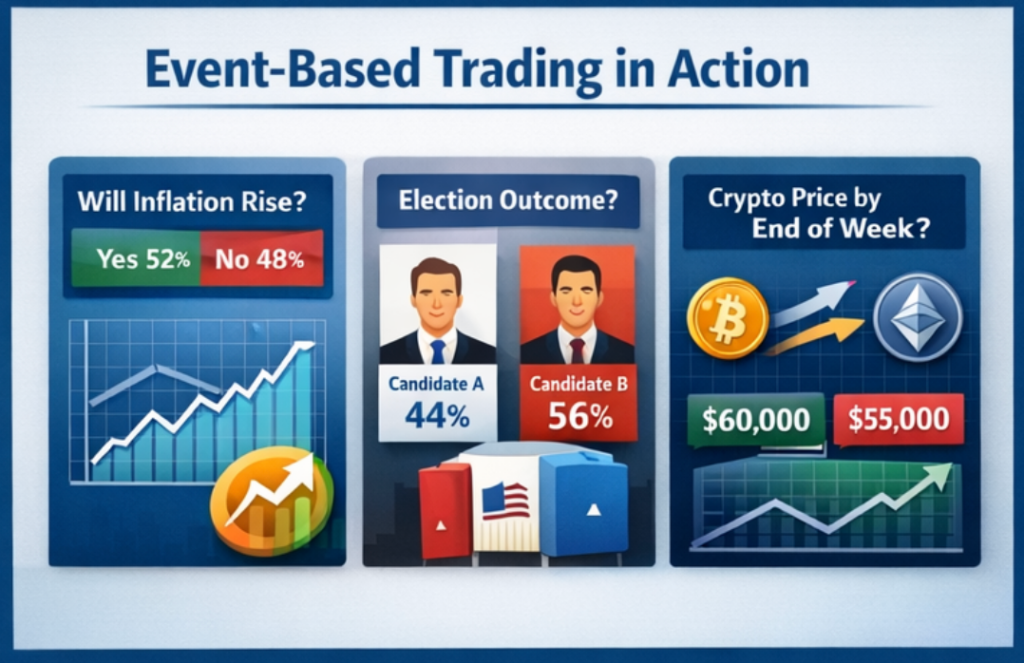
Instead of trying to figure out complex instruments, traders take positions on simple “yes or no” outcomes, whether inflation will exceed expectations, a rate cut will occur, or a political result will unfold a certain way. But prediction markets go beyond economics, offering sports outcomes, crypto pricing swings, popular culture events like the Oscars and much more. Anyone can find topics that interest them and participate in event-based trading.
As a result, prediction markets have lowered the cognitive barriers, allowing non-professional traders to join in and try their luck. For brokers, that translates into engagement during major news moments, no longer exclusively tied to financial markets.
On the flip side, the crypto market is entering its mature phase, no longer in its infancy as a financial commodity. As crypto matures, many platforms are looking for complementary products that can sustain engagement beyond traditional price speculation. Coupling crypto assets with the dramatic rise of prediction markets is a no-brainer in early 2026.
Why Prediction Markets Are Vital for Brokers in 2026
Financial markets are often seasonal, providing high trading activities during bull runs in case of crypto or major financial shifts in case of forex assets. However, there’s an inherent downtime that isn’t that costly for major players like Binance, but may be crippling for small or medium sized brokers with thinner margins. Here’s how prediction markets could shake up this status quo:
A. Merging Trading and Culture
Traditional trading products revolve around asset prices. Prediction markets revolve around events, and events are part of everyday life. By going beyond currency pairs, cryptocurrencies and commodities, prediction markets can offer an unprecedented variety of event contracts, including any possible field of interest.
This might include global political events, sports, pop culture, scientific research, technology, AI development and more. With this kind of global reach, the potential audience for brokerage providers can increase exponentially, no longer tied to professional traders and investors.
B. Prediction Markets Compress Trading Into Short Cycles
Capital markets have gradually compressed in time. Long-term investing gave way to day trading. Weekly options shortened timeframes further. Event contracts compress them again. Now, prediction markets can resolve in weeks, days or even hours, skyrocketing the engagement for brokerage companies.
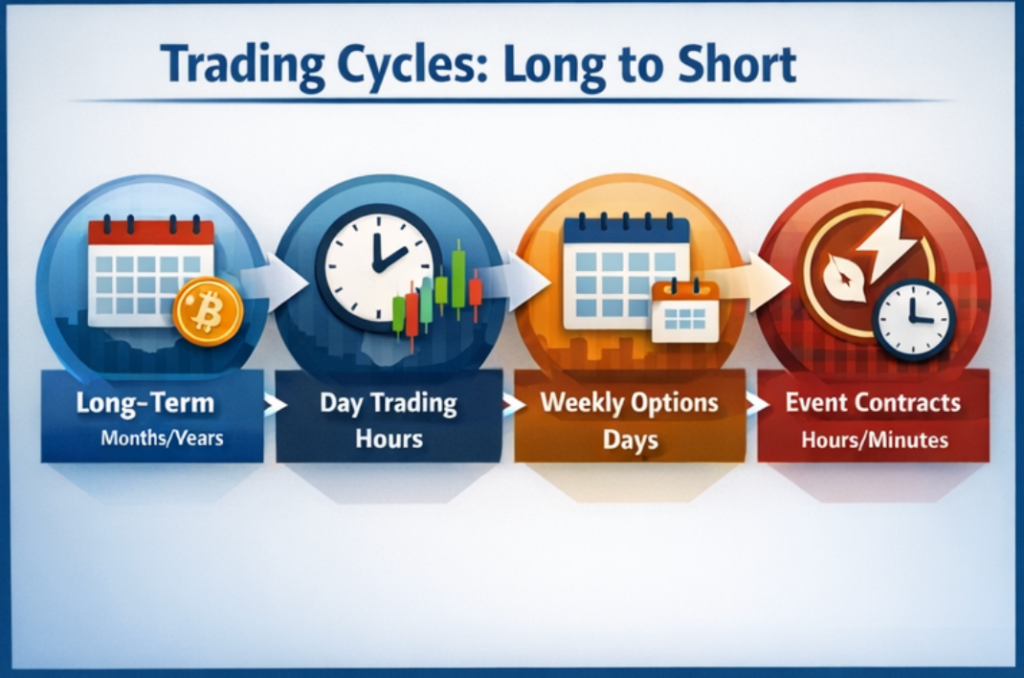
Short-duration instruments can increase trading frequency without necessarily increasing leverage. As a result, brokerages can enjoy much higher liquidity and experience less downtime in their operations. If implemented successfully, prediction markets can help reduce quiet periods between major market moves for smaller brokerages, allowing them to expand their operations in a fraction of the time.
C. Institutional Validation Is Growing
Several years ago prediction markets were a successful experiment turned into a niche market with a struggling bottom line and little-to-no institutional trust. Today, the institutional validation of prediction markets is increasingly visible.
With firms such as Intercontinental Exchange distributing event-market data, Jump Trading providing liquidity and strategic backing, Robinhood integrating event contracts into its platform, and Kalshi operating under federal regulatory oversight, signaling that event-based trading is moving into mainstream financial infrastructure.
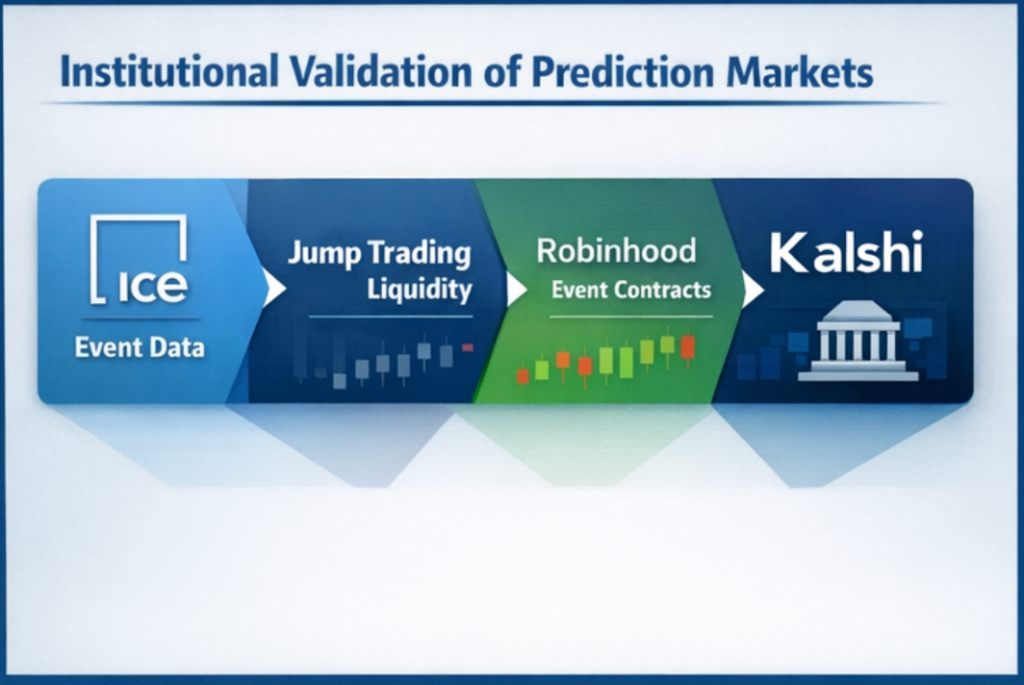
This is major news for prediction markets – creating a stable environment for event contracts in 2026 and longer being tied to major players like Polymarket.
D. Competitive Advantage in a Standardized Market
Last but not least, prediction markets are still in their relative infancy. While Polymarket and Kalshi are surging, their event contracts scene is still a blue ocean for small and medium-sized brokerages.
This early advantage may not last forever as more brokers enter the space. So, brokerages that move into this space early can seize a higher portion of the market share. With such exponential growth rates, even a tiny market share could become a multi-million dollar product for SME brokerages worldwide.
But how does a smaller brokerage tap into event contracts, exactly?
In the previous years, you would require a small army of legal specialists, lawyers and lobbyists to get past the complex web of global regulations. In 2026, white-label providers like Leverate are providing the prediction market infrastructure templates. Which leads us to:
E. Lower Barriers to Entry
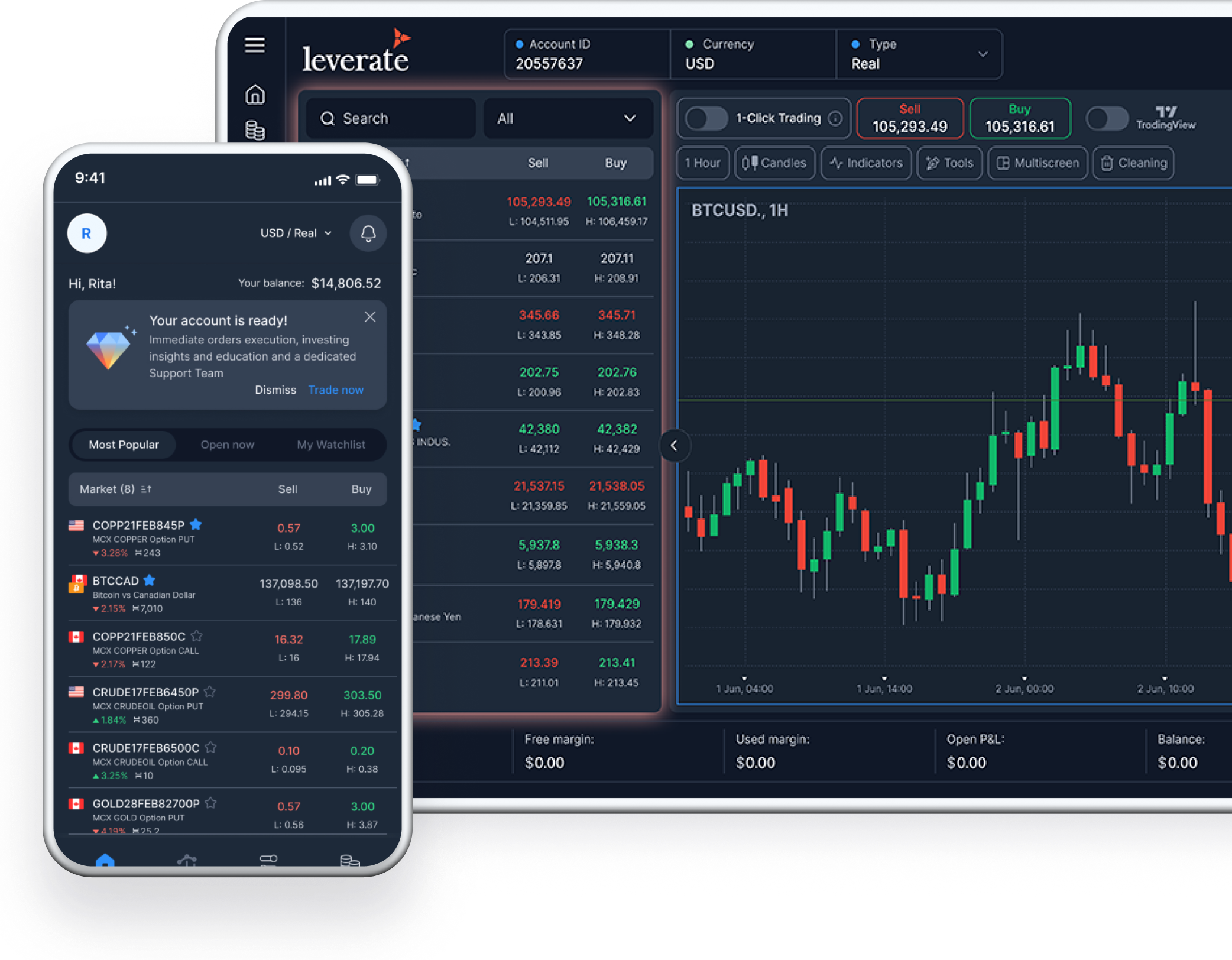
White-label providers are developing ready-made prediction market solutions that can plug into existing brokerage platforms. Companies such as Leverate are preparing infrastructure that allows smaller and mid-sized brokers to explore event contracts without building everything from scratch. Companies such as Leverate are preparing infrastructure that allows smaller and mid-sized brokers to explore event contracts without building everything from scratch.
White-label providers are developing ready-made prediction market solutions that can plug into existing brokerage platforms. Companies such as Leverate are preparing infrastructure that allows smaller and mid-sized brokers to explore event contracts without building everything from scratch.
Much like other white-label offerings, prediction markets infrastructure will allow smaller brokers to implement events contracts without legal hassle, tech debt and rising staff costs.
So, the paradigm shift is obvious – brokerages have just received their new competitive leverage in a standardized market, no longer constrained by legal hurdles and steep barriers to entry.
An Important Distinction for Prediction Markets
Prediction markets today resemble crypto in its early brokerage phase, misunderstood by some, dismissed by others, and rapidly adopted by early movers. But there is an important difference. Crypto introduced a new asset class. Prediction markets introduce a new format of trading.
That format is event-driven, short-duration, probability-based and aligns closely with how modern audiences consume information.
In that sense, prediction markets are not simply another product category. They represent a shift in how financial participation is structured. So, SME brokerages should not treat prediction markets as a shiny new tool, but a new format for their audience.
This distinction is vital, as many brokerages can survive without expanding into all asset classes. There are countless brokerages who manage to maintain healthy profit margins specializing in crypto, forex or energy markets, without falling behind.
This is not the case with new trading formats, since traders invariably demand new opportunities for highly liquid profits. So, it’s important to treat the prediction markets as a new genre of trading instead of simply regarding it as a new, niche market.
The Competitive Question for Brokers
Trading markets have a tendency to shift rapidly, demanding high adaptability even from the smaller players. The emergence of prediction markets is not an exception to this rule. While early 2026 presents a unique opportunity to seize the market share of events contracts, the time is a deciding factor.
The market is expected to rise from $2 Billion annual revenue to $10 Billion by the end of 2030. This means that brokers who don’t keep up can be left behind, unable to enter the saturated industry even by the end of this year.
Brokerages who fail to adapt might experience severe customer drop-off, as traders will migrate to platforms with event contracts.
Now, its important to distinguish that prediction markets do not replace traditional instruments. They complement them. But their absence might become an x-factor for traders who choose their next brokerage platform.
The broker who captures event-driven trading inside their ecosystem can increase retention and lifetime value. On the flip side, the brokers who ignore this demand might experience a shrinking target audience.
Final Thoughts: A New Product Frontier
The brokerage landscape in 2026 is defined by maturity. Execution is commoditized. Core asset classes are widely accessible. Technology stacks are standardized. Growth now depends on strategic product expansion.
Prediction markets are unlikely to replace forex, crypto, or equities. But they may become an important layer within modern brokerage platforms. As white label trading platform technology makes integration easier, event-based trading is shifting from experiment to practical option.
For brokers in 2026, the real question isn’t whether prediction markets are interesting. It’s how soon the traders will begin to expect them.