












The Brokerage Industry Is at a Turning Point: What the Data Is Telling Us
The brokerage growth playbook used to be simpler and leaner, allowing many companies to enter the market swiftly and scale in a matter of months. Add more acquisition channels. Add more tools. Add more workflows. Keep pushing volume through the machine. Today, that logic is getting weaker, as market saturation has infected the brokerage landscape.
The industry is being squeezed by three forces at once. Acquiring users is getting more expensive. The stack behind the brokerage is getting more fragmented. Automation is shifting from a nice operational upgrade to a competitive requirement.
In the same benchmark, API errors increased 16%, a sign that digital experiences are becoming more dependent on complex integrations behind the scenes. So, the 2026 brokerage market has less room for operational waste.
The Old Growth Playbook Creates CAC Problems
The old assumption was that growth could absorb inefficiency. If the acquisition worked, some mess in onboarding, retention, support, or internal coordination could be tolerated. New leads would keep flowing. Revenue would cover the friction.
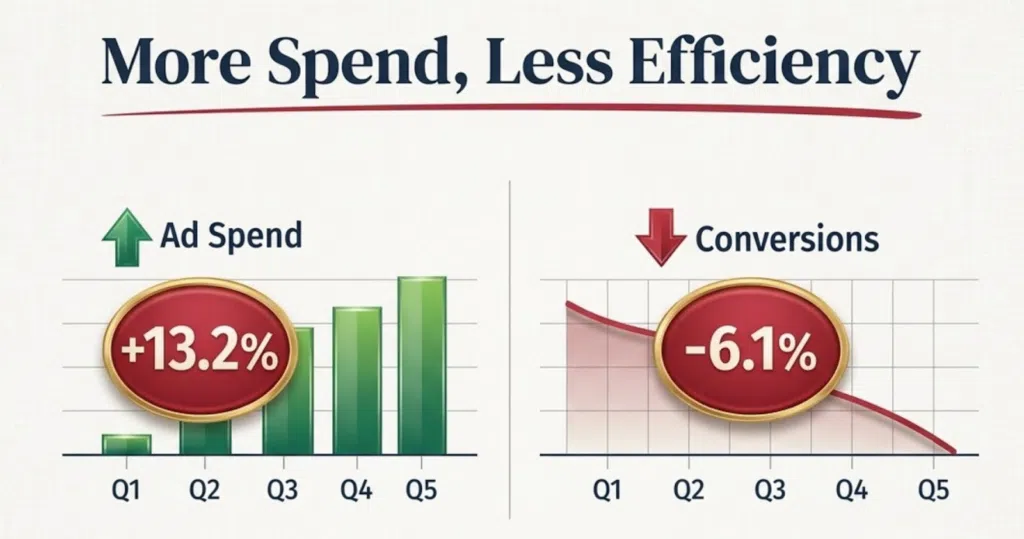
That gets harder when each acquired user costs more to win and convert. Contentsquare found that the cost of an online session rose 19% over two years, even as conversion performance weakened. That is not brokerage-specific, but the signal is clear enough: more spend isn’t a guarantee for higher conversion.
And that is where the brokerage conversation changes. Rising Customer Acquisition Cost (CAC) is a stress test for the entire operating model. When acquisition gets more expensive, weak onboarding hurts more. Slow follow-up hurts more. Disconnected data hurts more. The same lead pipeline that once looked acceptable starts leaking value everywhere.
In practice, acquisition economics are shaped by everything that comes after the click: onboarding speed, KYC flow, client funding, account activation, sales follow-up, re-engagement, and the quality of the client experience once trading begins.
A broker can pay a premium to acquire the interest of potential traders. Recovering value from that interest is the harder part. And the harder the acquisition becomes, the more brutally the stack gets exposed.
Marketing Teams Aren’t Always the Culprit
When a brokerage struggles with churn, marketing is often the first place people look. That is partly because acquisition metrics are visible early and easy to measure. If lead quality looks weak or conversion rates fall, the instinct is to assume the problem starts at the top of the funnel.
But customer churn is often shaped much later in the journey. A user may register and still never complete verification. They may pass KYC and still not fund the account. They may make a first deposit and still never reach consistent trading activity. At each stage, friction inside the operating model can erode value that marketing already paid to acquire.
For brokers, acquisition alone does not create revenue. Value is created when a user moves from interest to verified account, from funded account to first trade, and from first trade to repeat engagement. If that path is slow, fragmented, or unclear, the business can appear busy while still underperforming.
That is also why rising CAC changes the stakes. When traffic was cheaper, firms could absorb more internal leakage. In a tighter acquisition environment, onboarding friction, support gaps, and disconnected client management become more expensive to carry. The headline problem may look like marketing. The underlying problem is often operational design.
More Tools Did Not Create More Control
The industry’s response to complexity was often more software. A new CRM for sales visibility. A portal for client onboarding. Another layer for payments. Another for affiliate tracking. Another for support. Another for analytics. Another for retention. Each one solved a local problem. Together, they often created a bigger one.
This is the uncomfortable part of modern brokerage infrastructure: more tools can make the business less coherent. Contentsquare’s benchmark found API errors rising 16% as customer digital journeys depend on more third-party services. That same logic applies to any operation built across too many disconnected systems. What looks integrated from the outside can still be brittle underneath.
And brokerages feel that brittleness in expensive places. Data does not sync cleanly. Teams do not see the same client state. Manual reconciliation grows. Response times slip. The business keeps functioning, but it starts needing more human effort just to hold itself together. The tech stack misalignment hasn’t gotten so out of hand, that companies often require separate experts for this job. These experts handle the hand-offs between different tools and try to create a synergy in tech stacks. However, with a faulty architecture in the root of the system, even the best experts can’t make different tools work in harmony.
That is why fragmented stacks are no longer a minor IT complaint. They actively hinder teams from growing their user base or keeping existing clients happy.
Automation Is Becoming the New Margin Lever
For years, process automation sat at the edge of the brokerage business. Useful, but limited. A few triggers here. A few alerts there. Some workflow support in the back office. The mission was to make things easier in small increments and let talented teams work without distractions. That status quo has changed for over a year now.
In financial and brokerage services, firms are now pushing automation to onboarding, compliance, customer service, risk, and employee productivity. But UiPath’s 2025 report makes the counterpoint just as clearly: fragmented legacy stacks make this kind of automation technically complex and resource-intensive. In other words, the appetite is growing faster than the infrastructure quality needed to support it.
That gap is becoming a major hassle for larger brokerages with cobbled-together tech stacks. And the reason is – automation does not create much strategic value when it is bolted onto a disconnected operation. It can reduce some tasks. It can speed up some workflows. But it does not fundamentally change the economics of the business.
Integrated automation is different. It connects actions across the client lifecycle. It reduces handoffs. It improves speed without multiplying headcount. And in a market where CAC is rising, and complexity is already high, that starts to look less like optimization and more like margin defense.
However, reaching that sweet spot of custom tech stacks and highly integrated automation isn’t as easy as it sounds. There’s no dominant strategy for optimal automation when brokerage backends vary significantly across the industry.
What Winning Brokers Will Look Like in 2026
So, the brokerage industry is facing three clear problems with hardly any clear solutions. But, as of early 2026, we can observe some clever strategies emerging on the horizon. The stronger brokers in 2026 will be the ones whose systems behave like an ecosystem.
Unified Tech Stacks with Minimal Friction
That means cleaner movement from acquisition to onboarding. Better visibility across the client journey. Less manual stitching between departments. Faster operational response. More automation is embedded where it actually changes outcomes rather than where it simply generates activity.

This is where the market is heading. McKinsey’s 2025 banking work argues that productivity in financial services has stalled and that simplification at scale is becoming a serious management priority. That framing fits the brokerage environment more than many operators may want to admit. The issue is whether complexity is outrunning the organization’s ability to manage it. And more often than not, it does.
A Cleaner Approach to Building Systems
The next-generation broker will be more integrated, more disciplined, and more operationally aware because the market is becoming less forgiving. In practice, that discipline starts with system design.
For brokerages, a cleaner operating model usually means tighter coordination between the trading platform, onboarding and KYC, payments, CRM, support, and reporting. These functions do not all need to live in one product, but they do need to behave like one environment. If teams cannot see the same client status, if drop-off points are hard to identify, or if routine actions depend on repeated manual handoffs, complexity is already starting to erode performance.
It also means being more selective about automation. Repetitive actions such as account updates, onboarding prompts, document requests, and basic support routing can often be automated effectively. But churn signals, compliance exceptions, failed verifications, and early-stage trading inactivity still need close monitoring. Automating broken journeys often compounds the problem instead of solving it.
Why the Infrastructure Partner Matters More Now
As the brokerage stack becomes central to growth, the role of the infrastructure partner changes, too. This is no longer just about finding a platform vendor, a portal vendor, a CRM vendor, and a payments setup that more or less fit together. It is about reducing operational drag before it compounds. It is about choosing an environment that supports speed without multiplying complexity.
And considering the rising problem of segmented stacks, white-label solutions might be the way to go. Building out a brokerage tech stack from scratch can be an expensive endeavor. And, if the systems aren’t chosen carefully, the technical debt can accumulate quickly. With white-label solutions, the tech stacks are pre-built and tested for production.
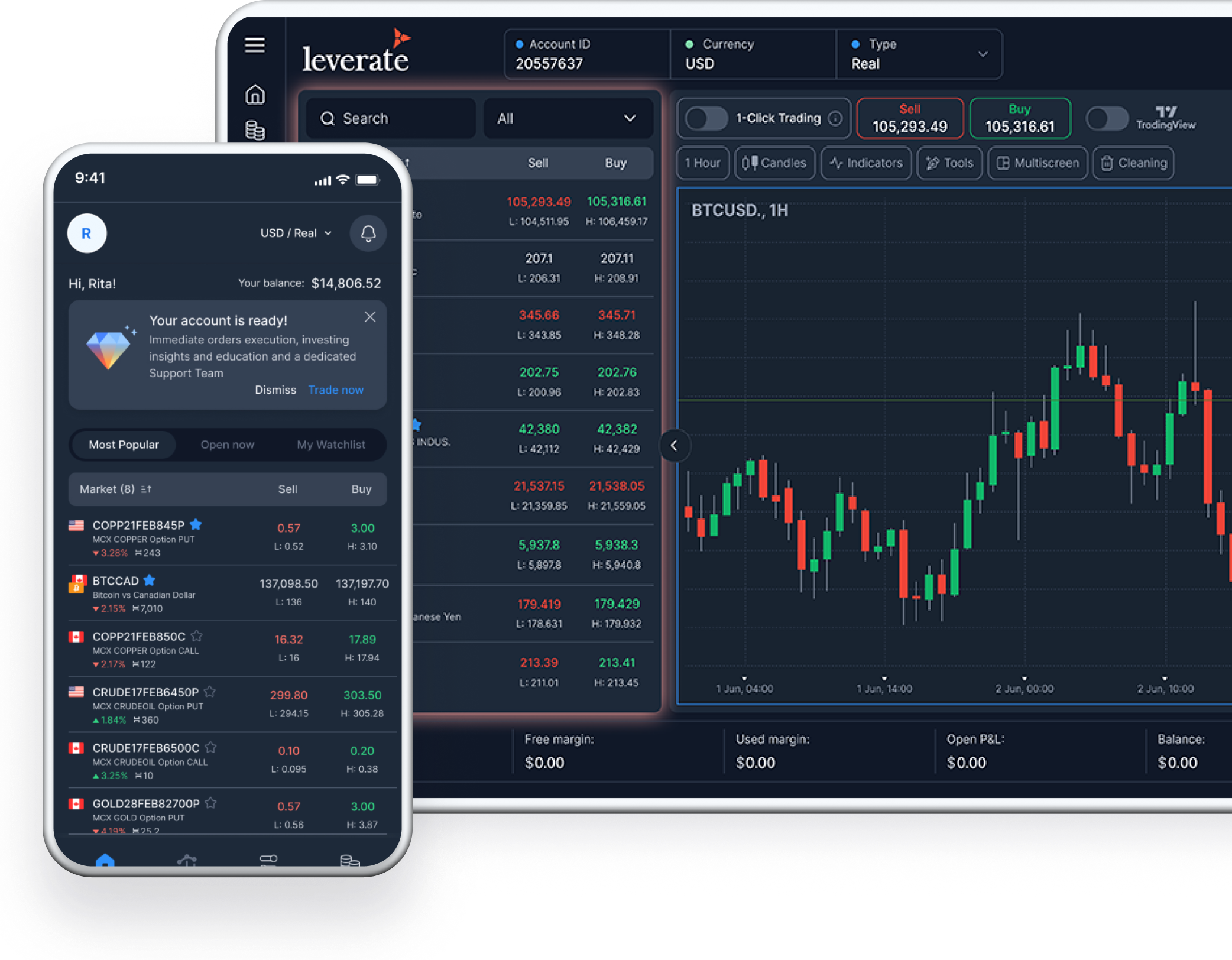
That is the strongest version of the Leverate argument heading into 2026. Leverate’s current positioning is built around an integrated brokerage environment rather than a loose collection of point solutions. Its brokerage offering combines trading infrastructure, CRM, liquidity, risk tools, and operational systems, while its MT4/5 setup is framed as part of a broader operating environment rather than a standalone deployment. Its Broker Portal is described as a control layer for configuration, performance visibility, and operational management.
That matters more now than it did a few years ago. When CAC was easier to absorb and automation was still peripheral, fragmentation was survivable. In a tighter market, it becomes expensive. And expensive complexity has a way of turning strategic decisions into infrastructure decisions very quickly.
Conclusion
The brokerage industry is not short on demand, technology, or ambition. The real culprits are inefficiency and a failure to design coherent systems on brokerage platforms, both customer-facing and backend. Acquisition is getting more expensive. Fragmentation is getting harder to carry. Automation is becoming more important, but also more dependent on the quality of the underlying stack.
That is why this feels like a turning point. Because the standard for operating well is rising. Brokers that understand these three hurdles and adapt first can achieve a strong position in the changing market.
FAQ
- Why is customer acquisition becoming more difficult for brokers?
Customer acquisition is becoming more difficult because digital advertising is more competitive, conversion paths are less predictable, and brokers need stronger onboarding and retention systems to recover value from each new lead. - What does a fragmented brokerage stack mean?
A fragmented brokerage stack refers to a setup where core systems such as the trading platform, CRM, client portal, payments, support tools, and reporting operate separately rather than as one connected environment. - Why is intelligent automation becoming more important in brokerage operations?
Intelligent automation is becoming more important because brokers need to reduce manual work, speed up internal processes, improve client journeys, and operate more efficiently as acquisition costs and operational complexity rise. - What Infrastructure is Best for Brokers in 2026?
Brokers in 2026 should look for infrastructure that supports tighter integration, better operational visibility, smoother client management, and automation that works across the full brokerage environment rather than in isolated workflows.
Disclaimer:
This content is based on multiple sources and is provided for educational purposes only. It does not constitute financial, legal, or investment advice.