







Prop Firm Technology: Infrastructure Behind Modern Proprietary Trading Firms
Proprietary trading firms have expanded rapidly in recent years, attracting traders worldwide through funded account programs and structured evaluation models. While much of the public attention focuses on traders and performance metrics, the foundation of these firms lies in the systems that support their operations behind the scenes.
How Back Office Systems Use Full Client History to Reduce Trader Churn
Trader attrition rarely announces itself. There is no formal exit, no cancellation email, no conversation. A trader simply stops logging in, and by the time a brokerage takes notice, the window for intervention has already closed. This pattern is not inevitable; it is largely the result of operational blind spots. When the systems managing a brokerage cannot connect the dots between client behavior, account history, and front-line response, churn becomes a structural outcome rather than an avoidable one.
Forex CRM in 2026: What Modern Brokers Should Look For

The brokerage landscape is more demanding than ever. Client acquisition costs are rising, regulatory pressure is increasing, and traders expect seamless experiences across platforms. In this environment, operational precision matters more than branding alone.
Prediction Markets Platform and Regulation: What Brokers Must Know in 2026
Prediction markets have arrived, and they represent one of the most exciting growth opportunities for brokers in years. With over $702 million in daily trading volume recorded in 2025 and major brokerages like Robinhood and Webull already offering event contracts, forward-thinking brokers are moving quickly to capture this fast-growing market.
What Is a Prop Firm Challenge and How Does It Work

The prop trading industry has grown at a pace few anticipated. Between 2020 and 2024, global search interest in prop firms rose approximately 607%, according to FinTech Statistics. Yet despite the surge in participation, the mechanics behind how firms actually evaluate traders remain widely misunderstood, both by the traders attempting challenges and, increasingly, by the operators building these businesses.
How the CFD Business Model Really Works Behind the Scenes

For aspiring brokerage owners, existing brokers looking to optimize operations, or institutional players considering entry into the retail CFD space, understanding the mechanics of trade execution, risk management, and revenue generation is essential. Comprehending these elements determines the difference between sustainable profitability and operational failure. The CFD business model operates on principles fundamentally different from traditional asset ownership, creating unique operational dynamics that require specialized infrastructure to manage effectively.
Building a Multi-Asset Brokerage in 2026: Tech Stack, Liquidity & Platform Choices

As trading markets become more saturated, digital traders are no longer satisfied with single-asset brokerages that only offer niche trading opportunities. With a multi-asset brokerage, you will let traders consolidate their portfolios and stay loyal to your platform, increasing the customer lifetime value by orders of magnitude.
Prediction Markets in 2026: The Next Growth Engine for Brokerage
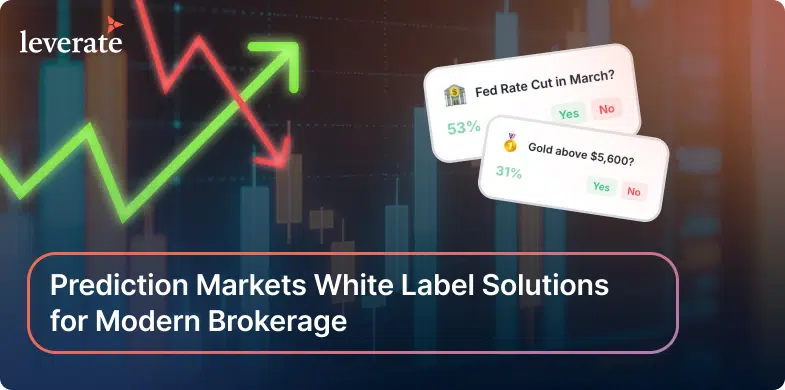
The brokerage industry is heading into a mature phase. Spreads are compressed, execution speeds are standardized, and white label tools have leveled the playing field. With most platforms offering similar pricing and features, brokers need new ways to differentiate and keep traders active.
Leverate Redefines the Standard for Brokers: Premium Technology, Zero Barriers
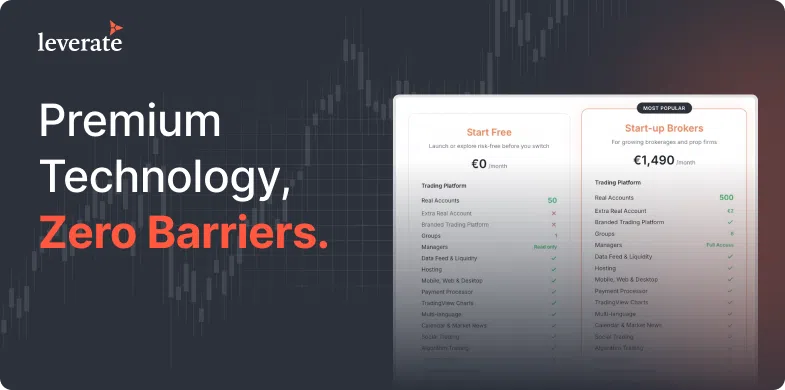
Following the successful launch of our comprehensive MetaTrader 5 ecosystem, Leverate is now leading the way for brokers worldwide, offering premium, institutional-grade technology through transparent pricing models designed for professional brokers, ambitious startups, and new market entrants.