
Peace and prosperity do seem to go together, and this appears no less the case than in South Korea. Last month saw South Korea agree to pursue signing a peace treaty with its long-held arch-nemesis North Korea. And this month saw the ruling Democratic Party of Korea garnering support to challenge the current ban on trading domestic ICOs**.**
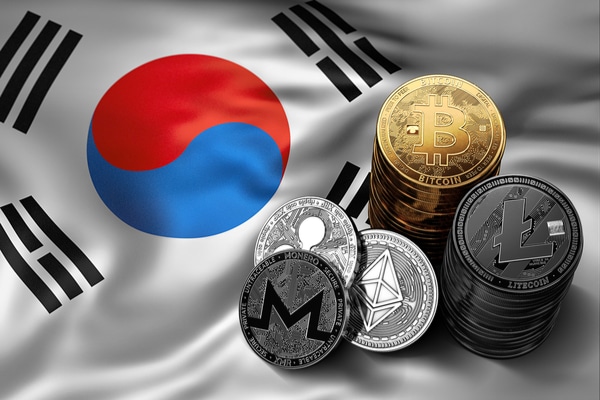
What does one incident have to do with the other? Prior to the commitment to denuclearize the Korean Peninsula, the economy of South Korea has been hobbling along as the political threat of atomic annihilation by its neighbor loomed large. Now that those concerns have suddenly diffused, South Korea is perceived as a much safer place to do business and its economy is only expected to grow as a result.
This progressive financial mood appears to be picking up everything in its path, including what were notoriously perceived ICOs. In 2017, the country’s justice minister, Park Sang-Ki proposed the shutdown of the local cryptocurrency exchange market, stirring rumors of an all-out ban on cryptocurrency trading. In response, the executive office of President Moon declared that while it had no intention to ban cryptocurrencies, it did intend to regulate the sector with pragmatic policies that would work to protect investors and simultaneously facilitate business growth.
Scale your brokerage today!
CRM & Client Portal, Trading Platform, MT4 & MT5 - All built for you.
Scale NowFor the Financial Services Commission (FSC) and local authorities, this policy agenda directed discussion away from a ban on outright trading to a ban on investors funding domestic ICOs. The FSC hinted that by limiting speculation within the market it could more effectively secure the stability of the local economy. Therefore, eradicating highly volatile tokens produced by ICOs became a direct target of this policy decision.
Yet, as the environment is right for business, South Korea’s largest technology conglomerate, Bithumb, which is also the nation’s largest cryptocurrency exchange, is launching an ICO outside of South Korea for inability to do so domestically. The proposed location for Bithumb’s launch is Switzerland, with contacts already established there. However, the benefits to be gained by South Korea are naught, as its own policy will force the nation to miss out on a multi-billion-dollar investment opportunity.
As investment opportunities like this continue to surface, this ban on domestic ICOs is being increasingly challenged. According to a CNN report, representative of the Democratic Party, Hong Eui-Rak, along with a team of 10 senior lawmakers, released a bill that permits companies to run public ICOs once they are given approval from the FSC, the Ministry of Science and the ICT.
Hong announced that this bill “is aimed at legalizing ICOs under the government’s supervision. The primary goal is helping remove uncertainties facing blockchain-related businesses.”
[more_in]
Many analysts expect that opposition to the hurried response to legalize domestic ICOs comes from local companies who are facilitating their ICO funding from abroad. The change of policy to fund ICOs domestically could cause immediate losses for the current structure of South Korea’s cryptocurrency market. There is no doubt that Crypto investors the world over will continue to keep a close watch on the legal proceedings in South Korea.