Proprietary trading has moved from bank balance sheets to fee-led funded-trader firms. This guide compares the three models, breaks down the prop P&L and gives brokers a go or no-go path.
Learning how to start a trading firm in 2026 looks very different from a few years ago. The proprietary trading model, where a firm funds vetted traders and shares their profits, has professionalised sharply since the 2025 shake-out, and the firms launching now are building on sounder foundations than the wave that came before.
The prop trading landscape underwent a brutal correction between 2024 and 2025. What was once considered a “gold rush” characterized by aggressive marketing and fragile risk models has rapidly matured into an operator-first era.
Leverate Marketing10 min read
Scale your brokerage today!
CRM & Client Portal, Trading Platform, MT4 & MT5 - All built for you.
Pass/fail models helped prop firms scale because they were simple. That still works as a basic filter, but it leaves out how stable, concentrated, and repeatable a trader’s performance really was. That matters more in 2026 because prop firms have better data, more flexible challenge design, and stronger review controls. Now, brokerages can benefit from implementing a more complex, nuanced system of evaluating their prop traders using modern trader evaluation metrics. But what does that system look like? Let’s explore.
Proprietary trading firms have expanded rapidly in recent years, attracting traders worldwide through funded account programs and structured evaluation models. While much of the public attention focuses on traders and performance metrics, the foundation of these firms lies in the systems that support their operations behind the scenes.
Learn how Leverate's prop firm technology, from the SiRiX white-label platform to risk tools, Prop CRM and affiliate systems, helps prop firms scale faster.
Build a prop firm competitive advantage with Leverate's SiRiX white-label platform, risk tools, Prop CRM, Broker Portal and affiliate systems in one ecosystem.
See how Leverate's prop trading technology, from the SiRiX white-label platform to risk tools, Prop CRM and affiliate system, helps prop firms scale faster.
Prop firm success depends on infrastructure. See how Leverate's SiRiX platform, risk tools, Prop CRM, Broker Portal and IB system help firms launch and scale.
Prop firm liquidity and leverage, plus execution speed: how each pillar affects slippage, risk and profits, and how SiRiX and Leverate tools support them.
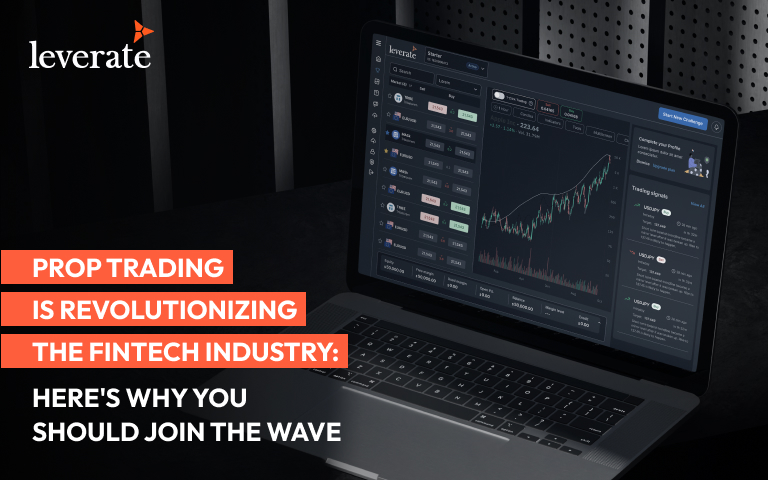
The fintech industry is undergoing a significant transformation, and at the heart of this change is proprietary trading, also known as prop trading. The big difference between prop trading and trading with your average broker is that trading is done with the firm’s capital rather than the trader’s funds. This shift is creating substantial ripples in the fintech world, and for good reason.
Leverate Marketing3 min read
Scale your brokerage today!
CRM & Client Portal, Trading Platform, MT4 & MT5 - All built for you.