With the rapid development of economic globalization and international trade, the methods of foreign exchange trading have become increasingly diverse. Building on an understanding of the foreign exchange market, this article examines current foreign exchange trading methods from two main perspectives: traditional and derivative.
I. The Foreign Exchange Market
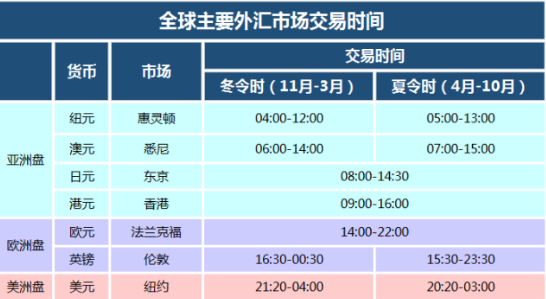
Foreign exchange trading must also take place in designated locations. Trading venues or networks that specialize in buying and selling foreign currencies are referred to as foreign exchange markets. This market operates 24 hours a day, as shown in the figure below.
II. Traditional Methods of Foreign Exchange Trading
The term “traditional foreign exchange trading methods” refers to the methods commonly used before the 1970s, which are relatively basic. They primarily include spot foreign exchange transactions, forward foreign exchange transactions, and swap transactions.
1. Spot Foreign Exchange Transactions
Spot foreign exchange trading refers to a type of foreign exchange transaction in which the buyer and seller settle the transaction within two business days after the trade is executed. The process of spot foreign exchange trading generally consists of five major steps: inquiry, quotation, execution, confirmation, and settlement.Spot foreign exchange trading is the most basic and common form of foreign exchange trading in the market. It can meet investors’ short-term funding needs, hedge against exchange rate risks, and enable speculative gains.
2. Forward Foreign Exchange Transactions
A forward foreign exchange transaction is a type of transaction in which the buyer and seller of foreign currency enter into a contract in advance to settle the transaction at a specified future date. The foreign exchange contract specifies details such as the settlement date, amount, and exchange rate.Forward foreign exchange transactions can meet the needs of different investors; for example, they can be used for asset preservation, speculative gains, arbitrage trading, and more.
3. Swap Transactions
A swap is a type of foreign exchange transaction in which, when buying or selling a certain currency, an equal amount of the same currency is simultaneously sold or bought, but the settlement dates for the buy and sell transactions differ. The purpose of a swap is to avoid losses resulting from exchange rate fluctuations.
III. Derivative-Based Foreign Exchange Trading Methods
So-called derivative foreign exchange trading methods are new forms of foreign exchange trading that emerged after the 1970s and are derived from basic trading. They primarily include foreign exchange futures trading, foreign exchange options trading, and foreign exchange margin trading.
1. Forex Futures Trading
To understand foreign exchange futures trading, one must first understand what a futures contract is. Futures are the opposite of spot trading, where payment and delivery occur simultaneously; instead, futures involve trading standardized commodities at a future date. Therefore, foreign exchange futures trading is a method of trading standardized foreign exchange (futures contracts) at a specific future date.So, why did a futures trading method—which is the opposite of spot trading—come into existence?
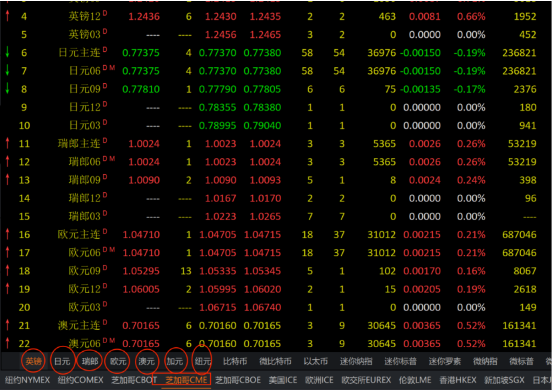
This is because futures offer unique advantages. First, hedging: we can establish positions in the futures market that are opposite to those in the spot market to hedge against risks. This is particularly helpful for importers and exporters when settling or selling foreign exchange, as it allows them to lock in both profits and risks. Second, speculative gains: we can predict trends in the futures market to profit from speculation.As shown in the figure below, these are the real-time quotes for major foreign exchange futures on the Chicago Mercantile Exchange (CME).
2. Foreign Exchange Options Trading
To understand foreign exchange options trading, you must first understand what an option is. As the name suggests, an option is a right to trade a certain financial asset in the future. As a right, it allows the holder—after paying a certain fee (the option premium)—to choose whether to exercise the option in a direction that is favorable to them on the expiration date.Therefore, in foreign exchange options trading, the buyer, after paying the option premium, gains the right to decide whether to exercise the option to buy or sell foreign exchange at the agreed-upon price within the option’s term. Consequently, foreign exchange options trading offers us a way to manage risk with lower costs and greater precision.As shown in the figure below, this is a profit-and-loss chart for options trading.

3. Forex Margin Trading
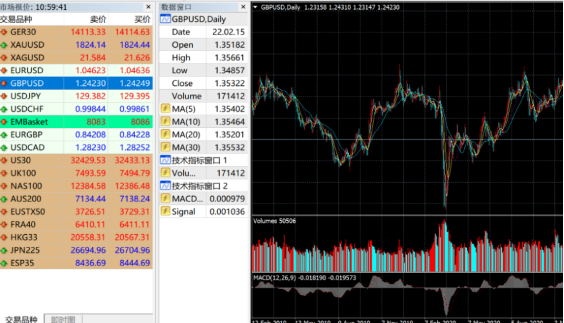
Forex margin trading, also known as forex margin trading and commonly referred to as “forex trading,” is a form of investment that utilizes the principle of leverage. By entering into a contract to buy or sell foreign currencies and depositing a certain percentage of margin (generally no more than 10%), traders can buy or sell large amounts of foreign currency using leverage.As shown in the figure below, this is a real-time quote for forex margin trading from a trading platform.
Want to build a forex trading platform? Start a forex brokerage? Are your MT4 and MT5 applications repeatedly being rejected?
Choose Sirix-Venture’s low-cost solution with cutting-edge technology:
Sirix White Label + LxFeed + CRM + website—avoid MT4 and MT5 rejection, enjoy a simpler and more intuitive interface, lower prices, and greater control.