
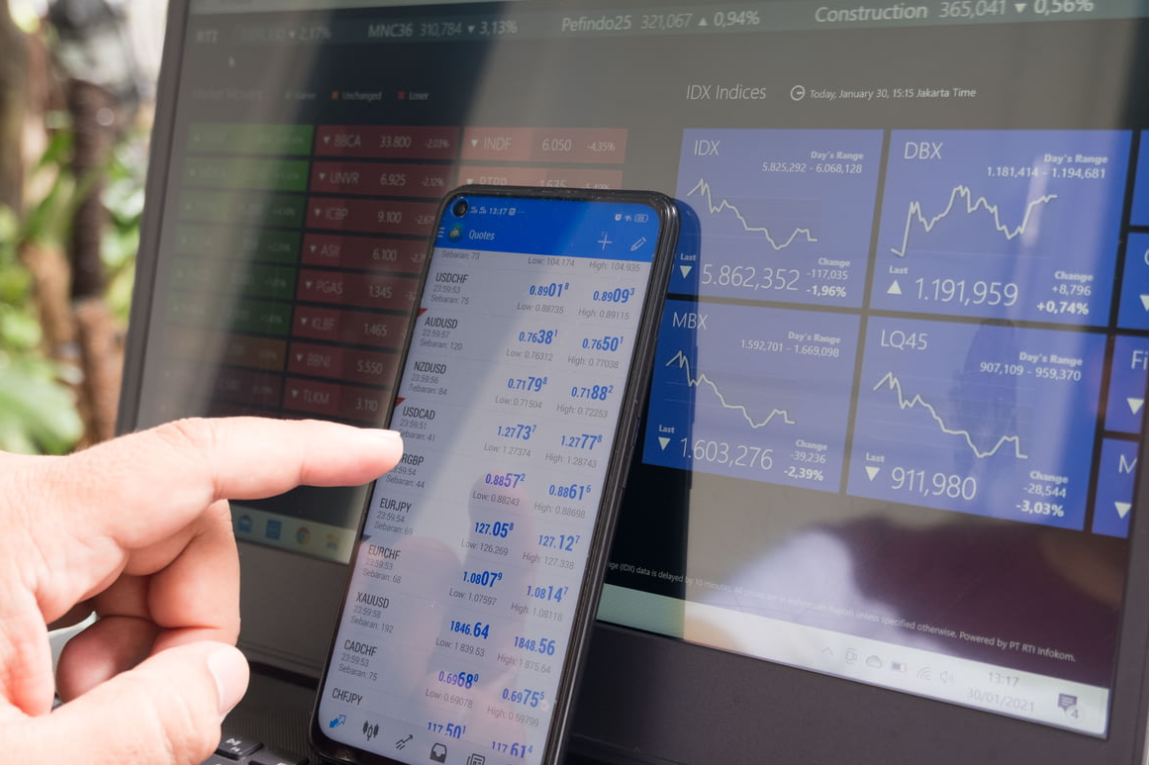
CRM stands for Customer Relationship Management. In the rapidly evolving and highly competitive forex market, every forex broker must do more than simply provide clients with satisfactory products, timely information, and convenient trading;all of which are considered “hard power.” They must also enhance their appeal by strengthening their “soft power” through effective customer relationship management and efficient platform management, thereby securing a favorable position in the industry. Selecting the right CRM system is key to a forex broker’s ability to enhance its core competitiveness.
Effective customer relationship management is the lifeblood of any retail brokerage firm. LXCRM is carefully designed for you and your forex traders. It integrates your platform with your phone system, email, and text messaging to make it easy to stay in touch with your traders. Create automated notifications for major events, margin calls, and marketing campaigns.LXCRM also offers affiliate system integration, allowing brokers to track the performance of their affiliates.
For forex brokers, a good CRM system plays a crucial role, and its most obvious advantages are primarily reflected in two areas:
On the one hand, it helps prevent customer churn and enhance customer loyalty.By segmenting existing clients and documenting each client’s preferences and characteristics, brokers can provide personalized, tailored services to different client groups, ensuring continuity in customer service. Through long-term, positive interactions with clients, they can increase clients’ trust in and satisfaction with the platform, thereby effectively retaining existing clients, preventing client churn, and better developing potential clients.Only by retaining customers can a source of revenue be secured; only by maintaining and increasing customer engagement can sustained profit growth be achieved.
On the other hand, this approach improves internal collaboration and the efficiency of information sharing. During the process of managing client information throughout the entire lifecycle and customizing services, various types of internal information are uploaded to the backend system. This ensures that client data is properly preserved, making it convenient for the platform to retrieve client status reports, improving the efficiency of reallocating existing resources, and enabling these resources to be utilized more effectively.For example, sharing information such as sales techniques, product details, and quotation materials can improve the work efficiency and professional competence of sales personnel, foster stronger internal collaboration, and ultimately enhance the platform’s core competitiveness.
Scale your brokerage today!
CRM & Client Portal, Trading Platform, MT4 & MT5 - All built for you.
Scale NowGenerally speaking, foreign exchange CRM systems are primarily divided into three parts:
Client System: The primary functions of the client system are client information and account management, specifically including account registration, MT4 account opening, bank card information management, ID document management, password reset, leverage adjustment, online deposits and withdrawals, fund transfers, and transaction history;
IB System: The primary functions of the IB system are the management of clients and subordinate IBs, specifically including IB information management, client management, client order management, client commission management, commission settings, commission statistics, and IB tier management;
Back-End System: The primary functions of the back-end system are to enable the brokerage firm to manage clients and IBs. Specifically, these include account opening management, deposit and withdrawal management, fund transfer management, document management, leverage adjustments, commission settings, product settings, IB management, exchange rate management, and announcements.
So, how should forex brokers choose a good CRM system? Generally speaking, they can evaluate it based on the following three key factors:
First is brand recognition.The higher the brand recognition, the more popular the brand is among users. This also implies that the services provided by this CRM system are superior to those of other providers, offering better service consistency. Since the system is constantly updated to meet evolving market demands, only a capable provider can ensure continuous updates and consistently deliver better services.
Second is functional compatibility. Each forex broker must identify its specific needs based on the characteristics of its own platform and select a CRM system that meets those needs.It is not necessarily true that the more features a CRM system offers, the better it is. A good CRM system should address the broker’s specific needs and resolve personalized requirements while also providing additional, complementary features. Compatibility should be the primary focus, with complementary features serving as a secondary consideration.
Third is cost-effectiveness. Every broker is at a different stage of development, and even a single broker may require different types of CRM systems at various stages of its growth; therefore, evaluating cost-effectiveness is crucial.For example, CRM systems can be categorized as general-purpose, specialized, or custom-built, with prices increasing as the level of customization rises. For newly established forex brokers, a CRM system with basic functionality is sufficient to meet fundamental customer service and management needs due to cost considerations;conversely, for large, well-established brokers, providing more personalized customer service is of greater importance.
In addition, when selecting a CRM system, brokers should pay close attention to factors such as device and operating system compatibility, the system’s specialization in foreign exchange, its reliability, security levels, and post-implementation maintenance and upgrade services.