




With the continuous development of the foreign exchange industry, the industrial chain surrounding the various steps and processes of foreign exchange trading has become increasingly mature and well-established. In this article, we will analyze the structure of the foreign exchange industrial chain by examining the entire process—from establishing a foreign exchange trading platform to completing a full foreign exchange transaction.
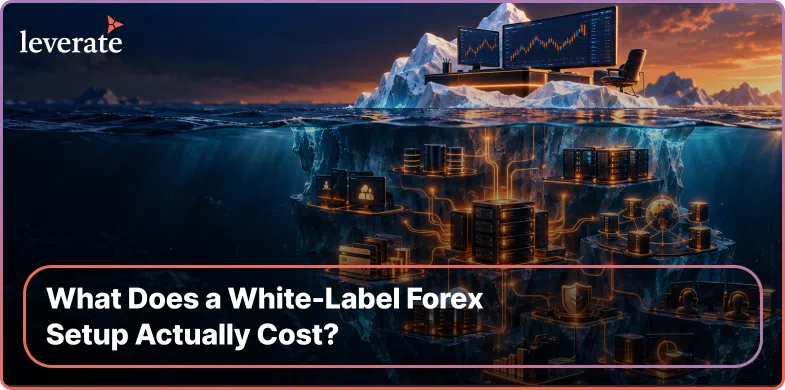
Setting up a forex trading platform. There are two ways to set up a forex trading platform. One method—used by most new brokers—is to purchase a white-label solution directly; the broker that owns the master platform simply rebrands it for the broker purchasing the white label.The other method is to enlist the help of a forex platform developer, who can assist you in building your own forex platform from scratch and provide all the necessary software and hardware support.
Once a foreign exchange trading platform has been set up, if the platform is not a pure market maker (MM)—that is, a platform that trades against its clients—it will need to secure sufficient liquidity.For most brokers, going directly to bank market makers to obtain liquidity is not a viable option; the massive capital requirements and strict risk management controls are enough to shut out small and medium-sized brokers. Consequently, liquidity providers specializing in aggregating liquidity have emerged.There are many types of liquidity providers, including specialized liquidity aggregation firms, large dealers, and POP brokers, among others. All of these providers can supply the platform with ample liquidity.
If a platform needs to obtain more quotes, it must set up a clearing bridge.Setting up a clearing bridge allows the platform to access quotes from different providers, which entails significant technical challenges. Consequently, specialized bridging companies have emerged to focus on developing more stable and robust clearing bridges. These companies enable forex platforms to access favorable quotes more conveniently while ensuring the entire forex trading market operates more smoothly.
When discussing an industry chain, one cannot fail to mention its specialized CRM (Customer Relationship Management) system—commonly referred to as customer relationship management.In addition to features common across all industries—such as customer interaction and customer satisfaction analysis—forex CRM systems require specific functions, such as commission management, account management, and customer registration. Consequently, companies specializing in forex CRM systems have emerged, ensuring that data on forex trading platforms operates more stably and securely.
Furthermore, for a platform to conduct trading, it must be regulated, which requires applying for a regulatory license. The application process for a forex regulatory license is extremely complex; even for the most accessible offshore licenses, it is highly unlikely that a platform would be able to obtain one on its own.This has led to the emergence of licensing agencies. These agencies assess a platform’s capabilities and qualifications to apply for the most suitable license, efficiently and conveniently resolving this challenging issue for the platform.
A platform requires trading capabilities, but that’s not all—it also needs the most critical hardware: servers. Every aspect must be carefully considered, including the quality and stability of the servers, whether their security can be guaranteed, and where they should be located. That’s why there are companies that specialize in providing servers and subsequent server maintenance to ensure the platform can operate smoothly and continuously.
Let us help you build the perfect forex brokerage firm!
Build your forex business using our cutting-edge technology. LXSuite provides everything you need to build a brokerage business from the ground up. Choosing our reliable and comprehensive software solutions allows you to focus on doing your best.
Offer your clients the world’s most popular forex trading platforms through our MT4/5 white-label solutions, using either your own brand or ours.