
In 2022, as the COVID-19 pandemic continued to flare up, global financial markets experienced significant volatility. However, China’s foreign exchange market continued to demonstrate increasing resilience, with a steady rise in the number of startup forex brokers.Some brokers have even achieved remarkable results amid highly volatile market conditions. However, while high volatility brings high returns, it also entails high risks. Faced with various new changes and challenges, what risks will startup forex brokers encounter in 2022? And how should they respond?
1. The Complex Global Economic Environment
The COVID-19 pandemic has had a massive impact on the global economic environment, further influencing the fiscal and monetary policies of various countries. To respond to these changing economic conditions, countries have frequently adjusted their interest rates. These interest rate fluctuations have led to increased volatility in global foreign exchange markets, exposing brokers and traders to greater risks and challenges.At the same time, although China’s macroeconomic indicators stabilized and rebounded in 2022, and the RMB generally appreciated within a reasonable range, high-interest-rate currencies in some developed countries—such as the Canadian dollar and the Australian dollar—are facing significant depreciation due to the pandemic, leading to an overall increase in price volatility in the foreign exchange market.
In the face of the current volatile foreign exchange market, brokers should guide clients to develop a risk-averse mindset, conduct retail foreign exchange business by comprehensively considering factors such as client type and risk tolerance, and adhere to the risk management principle of “preserving capital” rather than “generating returns.”Second, forex brokers must adjust their trading plans and models in light of the new global economic environment to cope with greater price volatility. This includes setting more conservative stop-loss orders and strictly controlling leverage ratios. The CEO of retail broker FxPro once stated, “Market volatility is enormous amid the pandemic, and clients should be even more aware of the risks associated with trading leveraged products.”
Scale your brokerage today!
CRM & Client Portal, Trading Platform, MT4 & MT5 - All built for you.
Scale Now2. Mainstream Trading Platforms Tighten Review Processes
Many forex brokers choose MetaQuotes, a technology provider, as their trading platform provider. However, in recent years, MetaQuotes has announced that it will tighten the application review process for brokers in Asia and will require all brokers to undergo KYC verification to prevent illegal activities such as financial fraud and identity theft.Review MetaQuotes’ latest KYC document submission requirements and verify, item by item, whether your startup meets MetaQuotes’ requirements. Key aspects of KYC include:
- Certificate of Incorporation
- Register of Shareholders and Directors
- Good Standing or Incumbency
- Copies of the passports of shareholders and directors
- Shareholders and directors taking a selfie with their passports
- Utility bill under the company’s name
- Bank reference letter or bank statement under the company’s name
- The company’s business scope must include: financial services / currency trading / foreign exchange trading. Company business activity registration: financial services / currency trading / FX trading
- A legal letter from a local lawyer certifying that the company has the capacity to conduct foreign exchange transactions Legal letter from a local lawyer, to prove the company has the capacity to do FX trading
- Proof of Domain Ownership
The company owner must upload the KYC documents listed above. MetaQuotes typically sends a link and asks the company owner to click on it, turn on the camera, record a video and take photos (front, left side, and right side), and then upload the documents while the camera is still on. In the past, technology providers such as Leverate could collect and upload the documents.

However, there are far more trading platforms on the market than just MT4 and MT5. Faced with stricter regulatory scrutiny, white-label companies can opt for other highly popular platform providers, such as Leverate, to receive the same high-quality technical services.
3. The Inherent** Limitations **of Start-up Forex Brokers
Startup forex teams lack the experience and capability to respond to market volatility. Most traders at startup brokerage firms are novices who not only lack trading experience but also do not have a precise grasp of market conditions; when significant market fluctuations occur, they struggle to respond in a timely and accurate manner.Furthermore, the financial strength of startup forex companies is not as robust as that of established forex brokers. When faced with liquidity issues such as cash flow problems, they often cannot resolve them on their own.
Therefore, startup brokerage firms must establish a comprehensive risk management system and take measures—such as providing thorough training to traders and enhancing clients’ trading capabilities—to prevent significant losses during trading. Furthermore, they must secure sufficient startup capital to avoid situations where operating funds fall short.
4. Regulatory Risks
Since China does not yet have an official foreign exchange regulatory body, foreign exchange brokers are subject only to regulation by overseas regulatory authorities; temporal and geographical barriers inevitably lead to regulatory risks.
Brokers should prioritize building a robust in-house legal team and hire professional legal and regulatory staff to monitor traders’ behavior during transactions, prevent violations such as financial fraud and money laundering, and ensure the company’s compliance.
5. Technical Issues
If a broker’s trading platform has poor system performance, it is prone to delays and system outages during periods of high trading volume. This can lead to fluctuations in trading prices, resulting in financial losses for both the broker and clients, and diminishing the trading experience for traders.
To prevent technical issues, brokers should select professional technology providers to ensure the stable operation of their trading systems. The trading platforms they establish should guarantee smooth operation, enabling the immediate and efficient execution of trade orders and preventing situations such as delayed trades.
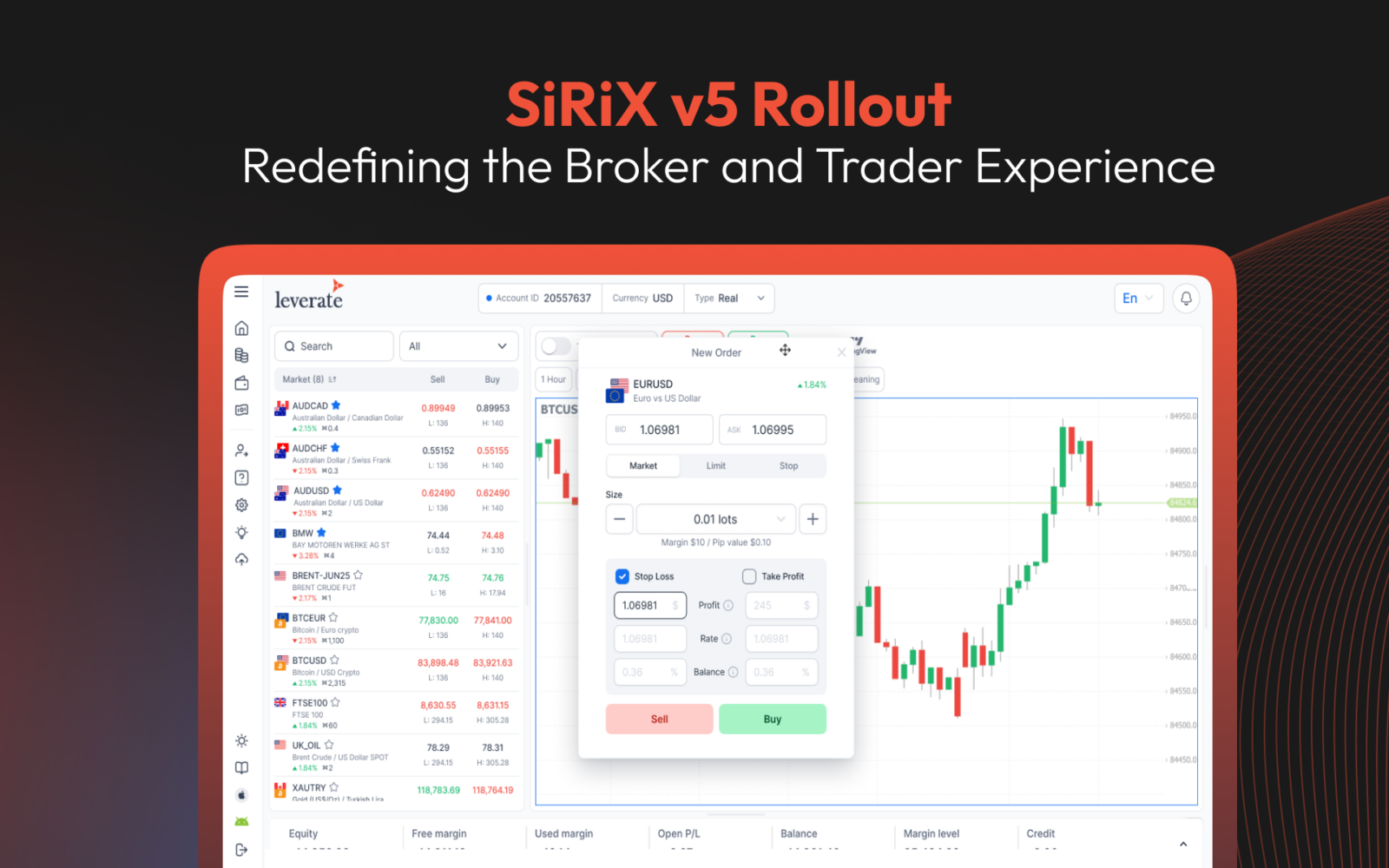
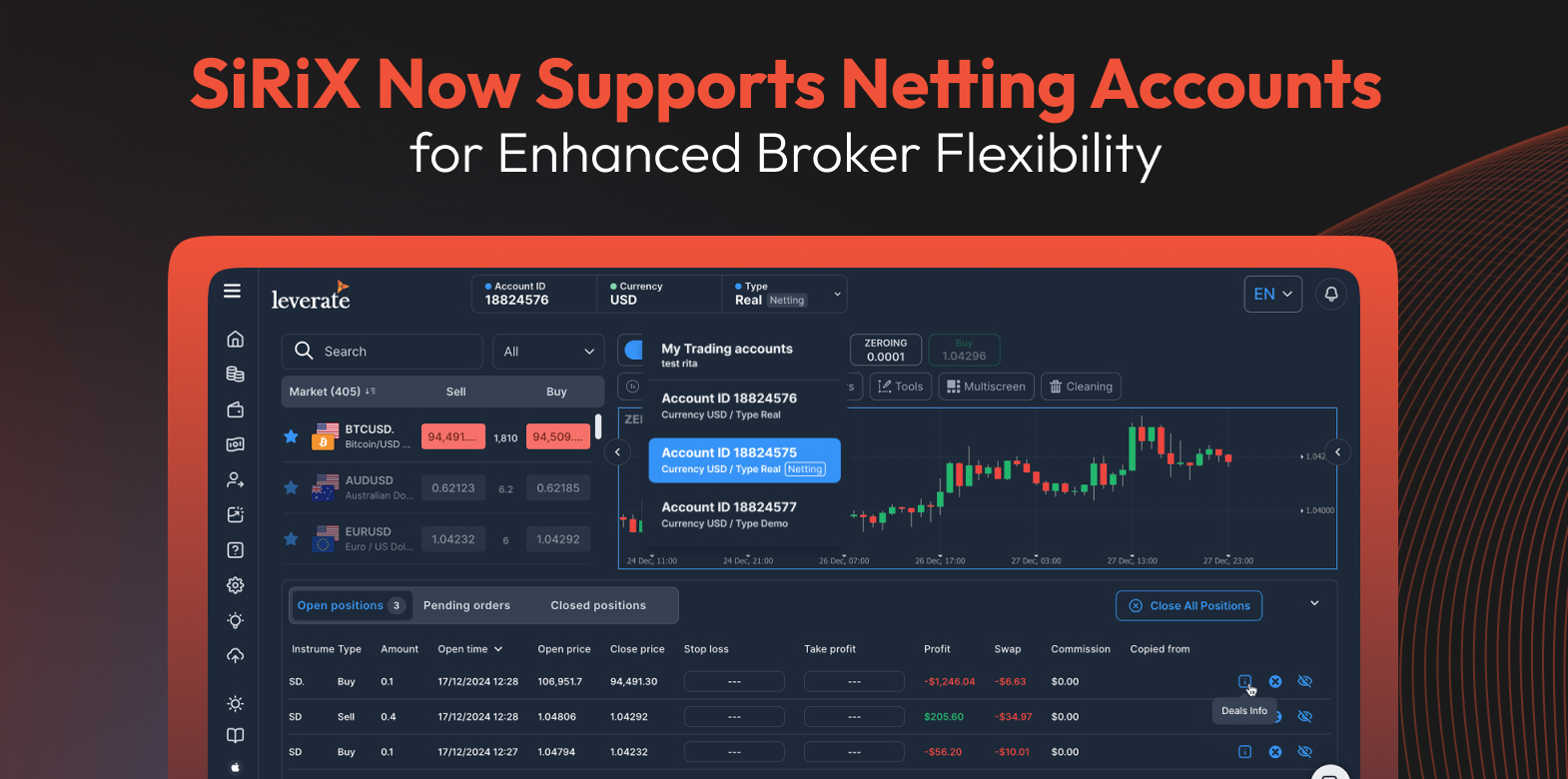
We recommend choosing Leverate’s Sirix trading platform. Sirix currently serves 300 brokers and is available on web, desktop, and mobile clients. Its ultra-high-performance servers ensure lag-free trading and deliver exceptionally fast trade execution speeds.
The Sirix trading platform also offers traders features such as copy trading and crypto trading, which simplify the trading process. Additionally, traders can utilize the educational resources provided by Sirix to learn trading terminology, strategies, and specialized knowledge on the platform, thereby strengthening their theoretical foundation and enabling them to develop well-planned trading strategies.