
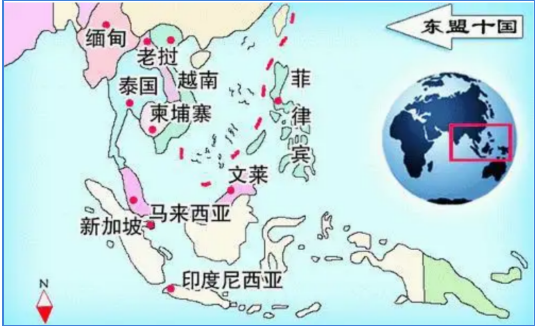
Southeast Asia, located in the southeastern part of Asia, comprises 11 countries with a large population and rapidly developing economies. Foreign exchange trading is becoming increasingly frequent in the region, and it holds great potential for growth. Therefore, establishing a foreign exchange trading platform in Southeast Asia presents a valuable business opportunity for forex brokers to expand their operations.

Forex Brokerage Platforms Targeting the Southeast Asian Market
I. Current State of the Southeast Asian Foreign Exchange Market
1. Active Forex Trading with Significant Growth Potential. Most countries in Southeast Asia rely primarily on tourism and trade; they have well-developed foreign trade, a wide range of import and export products, and frequent foreign exchange transactions. For example, Singapore, which focuses on tourism, is Asia’s largest emerging market currency trading hub and maintains close ties with financial centers around the world.
2. Forex licenses are relatively easy to obtain. In global rankings of the difficulty of applying for financial regulatory licenses, Southeast Asian countries fall into Categories 3 and 4, making it relatively straightforward for forex brokerage firms to obtain licenses.For example, applying for a currency brokerage license issued by the LFSA in Malaysia allows for both onshore and offshore operations; moreover, this license is the only one in Asia specifically granted for Straight-Through Processing (STP) operations.
3. There are few restrictions on forex trading. Relaxed foreign exchange policies have resulted in relatively lenient regulatory frameworks in many Southeast Asian countries, providing ample room for the development of free foreign exchange markets. For example, the Philippines offers a highly open environment and numerous venues for foreign exchange operations, and the licensing process for forex brokers is relatively straightforward, making the Philippines one of the fastest-growing countries in Asia’s forex brokerage industry.
4. Over-the-counter (OTC) trading predominates. In some Southeast Asian countries, forex trading is primarily conducted over-the-counter. For example, Vietnam’s forex market consists entirely of OTC transactions; there is no officially regulated trading system for interbank transactions, which has led to the rapid growth of Vietnam’s free market (commonly known as the black market).
Scale your brokerage today!
CRM & Client Portal, Trading Platform, MT4 & MT5 - All built for you.
Scale NowII. How to Build a Forex Brokerage Platform for the Southeast Asian Market?
1. Focus on the user experience of your products and provide a competitive experience. The product is at the core of competition. Although the Southeast Asian forex market holds great promise for the future, many forex brokers have already entered this market.However, the products offered by most forex brokers are becoming increasingly homogeneous, with little difference in trading platforms, spreads, and trading environments. To create distinctive products, brokers must base their offerings on the trading habits of people in Southeast Asia and build a refined trading platform that better suits local users.
2. Establish a local presence and optimize services. Many companies that perform exceptionally well overseas struggle to adapt when entering the Southeast Asian forex market. A major reason for this is that they simply transplant their foreign service models directly to the local market, which often do not align with local needs, making it difficult to expand their market presence in Southeast Asia.Therefore, when providing products and services to traders, it is essential to consider customer service in the local language and how to effectively resolve client issues.
3. Step up promotion and actively market. In addition to high-quality products and services, extensive promotion is essential, as the days when “good wine needs no bush” are long gone—especially in today’s internet age. For brokers new to the Southeast Asian forex market, promotion and marketing are arguably the fastest way to break into the market.Specifically, this involves using online platforms and targeted advertising for promotion, as well as marketing strategies such as offering margin rebates for new account openings and deposits, and reducing spreads to attract clients.
Want to build a forex platform? Start a forex brokerage?
Choose Sirix-Venture’s low-cost solution with cutting-edge technology: Sirix White Label + LxFeed + CRM + Website
Avoid MT4 and MT5 rejection with a simpler, more intuitive interface, lower prices, and greater control.