
Retail forex brokers handle countless forex trade orders every day. In the face of volatile forex markets, risks such as unexpected events, extreme market conditions, quote delays, and information leaks can deal a severe blow to brokers; therefore, effective risk management is crucial for forex brokers.
In response to common risks faced by forex brokers, this article offers the following three risk management recommendations:
For startup forex brokers, we recommend reading: “Risks and Countermeasures That Startup Forex Brokers May Face in 2022”
1. Optimize the company’s liquidity
Adequate liquidity helps brokers respond calmly to unexpected events and extreme market conditions. A lack of liquidity may stem from the market itself or from a broker’s improper management of liquidity. Insufficient liquidity may prevent brokers from matching traders with appropriate quotes when order volumes are high, ultimately leading to significant delays in order execution.
Broker-dealers should establish a comprehensive liquidity risk management system.
First, you should choose to partner with reputable liquidity providers. (Further Reading: Three Key Principles for Forex Brokers When Selecting Technology Providers ) These providers typically have robust liquidity risk management processes in place and can take effective measures to mitigate the impact of liquidity shocks when the market experiences them.
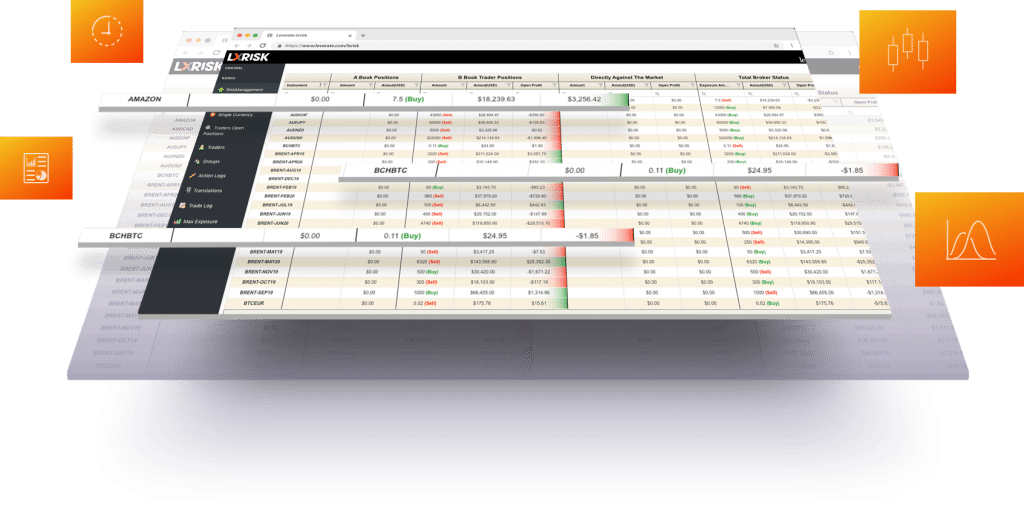
lxrisk Risk Management System
At the same time, brokers should expand their liquidity pools in line with the continuous growth of their business, increase the number of partner liquidity providers, and ensure an adequate supply of liquidity.
Second, brokers can set liquidity limits for traders based on their specific circumstances to prevent certain traders from engaging in excessive trading during exceptional market conditions, which could lead to excessive liquidity pressure.
Scale your brokerage today!
CRM & Client Portal, Trading Platform, MT4 & MT5 - All built for you.
Scale Now2. System Development and Maintenance
Today, the foreign exchange trading industry has become increasingly digitized and networked. Brokers’ CRM systems typically store vast amounts of user information and transaction data; if a system malfunction occurs or the backend is compromised by cybercriminals, leading to data loss or leaks, the consequences could be catastrophic.Brokers must regularly test their platform systems for vulnerabilities, update security mechanisms to prevent hacker attacks, and protect users’ personal and trading information through methods such as encrypted storage. Selecting a high-quality cloud hosting service is also a crucial measure for brokers to safeguard data security.
Leverate’s LXCloud is a private data center built on Dell EMC hyper-converged technology. It features a high-performance, highly secure network infrastructure that effectively prevents hackers from stealing data and ensures the security of data within the platform.
In addition, risks that brokers may face include system delays or outages caused by poor server performance, as well as DDoS (Distributed Denial of Service) attacks that prevent traders from accessing the website and logging into their accounts.Well-known brokers such as FXCM and ActiveTrades have all been victims of DDoS attacks, while Leverate’s LXCloud cloud service offers brokers an effective way to prevent DDoS attacks launched by hackers.
In addition, regularly testing the server’s maximum capacity, limiting the number of real-time transactions, or periodically upgrading the server system are also effective ways for brokers to prevent system delays or outages and optimize the trading experience for traders.
3. Controlling Operational Risk
Operational risk arises within the forex brokerage firm itself. When executing trade orders, brokers should implement risk control measures tailored to their specific circumstances. For Market Makers (MM) operating under the MM model, since they maintain a hedging relationship with clients, brokers must manage their own risk of loss. This typically involves screening for consistently profitable clients and setting certain trading thresholds for them.
For STP brokers, client orders are routed directly to banks. The broker must ensure that orders are matched with the best available quotes from the banks; otherwise, order prices may fluctuate, and the broker itself may incur losses. Therefore, many brokers have adopted the MM+STP model, diverting profitable clients to the STP channel.
However, this approach presents certain challenges and requires brokers to establish systematic management mechanisms to screen different types of traders and implement appropriate strategies. Leverate’s LXRisk uses a dashboard to monitor and track the risks associated with different trading instruments under various trading modes. With LXRisk, you’ll gain access to tailored risk management solutions.
Being prepared in advance is the right approach to risk management. By preparing for potential risk events beforehand, brokers can minimize the losses ultimately caused by risks and safeguard the company’s long-term, healthy development. At the same time, leveraging technology to detect and control risks is also the preferred approach for brokers to reduce risk management costs and enhance the effectiveness of risk management.
Want to build a forex platform? Start a forex brokerage?
Choose Sirix-Venture for low-cost solutions and cutting-edge technology: Sirix White Label + LxFeed + CRM + Website
Avoid MT4 and MT5 rejection with a simpler, more intuitive interface, lower prices, and greater control.