
Understanding exchange rate systems can help us better analyze a country’s economic conditions and economic policies, as well as conduct foreign exchange transactions. However, there are many different exchange rate systems around the world, and it can sometimes be difficult to determine exactly which system a particular country uses.
In fact, the world’s exchange rate systems can generally be divided into two categories: fixed exchange rate systems and floating exchange rate systems. However, since fixed and floating represent two extremes, most countries adopt a system that falls between the two—known as an intermediate exchange rate system—as shown in the figure below.Intermediate exchange rate systems include those leaning toward fixed rates, such as the crawling peg and the currency board system, as well as those leaning toward floating rates, such as the target band system and the managed floating exchange rate system. This article will introduce the main exchange rate systems implemented by various countries from the two perspectives of fixed and floating exchange rate systems.

Centralized Exchange Rate System
Scale your brokerage today!
CRM & Client Portal, Trading Platform, MT4 & MT5 - All built for you.
Scale Now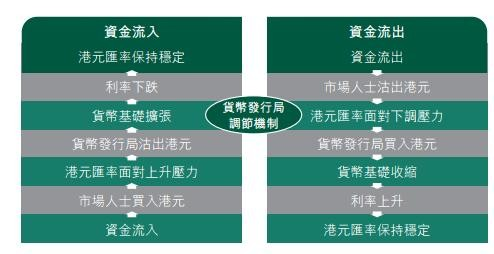
Hong Kong’s Linked Exchange Rate System
2. Floating Exchange Rate System
A floating exchange rate system means that a country’s currency exchange rate is determined entirely by the supply and demand of the foreign exchange market, with no government intervention. This is actually an extreme form of floating or laissez-faire. In reality, very few countries completely tolerate exchange rates, and more or less intervene. Below, we will introduce these common floating exchange rate systems one by one:
1. The exchange rate target system is a managed floating exchange rate regime, in which a country allows its currency to fluctuate within a certain range; once fluctuations exceed the specified range, the government intervenes. Typically, this range is 10 percent above and below the central exchange rate.Exchange rates fluctuate above and below economic fundamentals (the central rate). At times, they remain relatively close to the central rate—a phenomenon known as the “honeymoon effect”—while at other times, they drift significantly from the central rate, approaching the upper or lower limits of the target band—a phenomenon known as the “divorce effect,” as illustrated in the figure below.
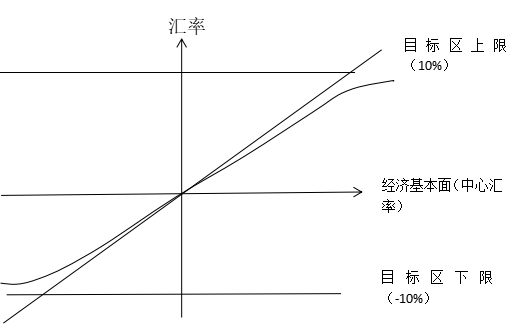
The Divorce Effect of Exchange Rates
2. A managed floating exchange rate system, also known as a “dirty float,” involves a country intervening to a greater or lesser extent in the floating exchange rate to steer it in a direction favorable to its own economy.Many countries around the world claim to operate under a floating exchange rate system (clean float) without intervention; in reality, however, they all engage in some degree of intervention behind the scenes.
Let us help you build the perfect forex brokerage firm! Build your forex business using our cutting-edge technology. LXSuite provides everything you need to build your brokerage business from the ground up.